



UK Supreme Court · Parliament Square, London
Close access to intricate high-level stonework
One of the principal projects involved the decorative stone sculptures and ornamental stonework around the upper levels of the building. CCS technicians accessed these details at close range to check for movement, identify insecure sections and carry out remedial work where required.

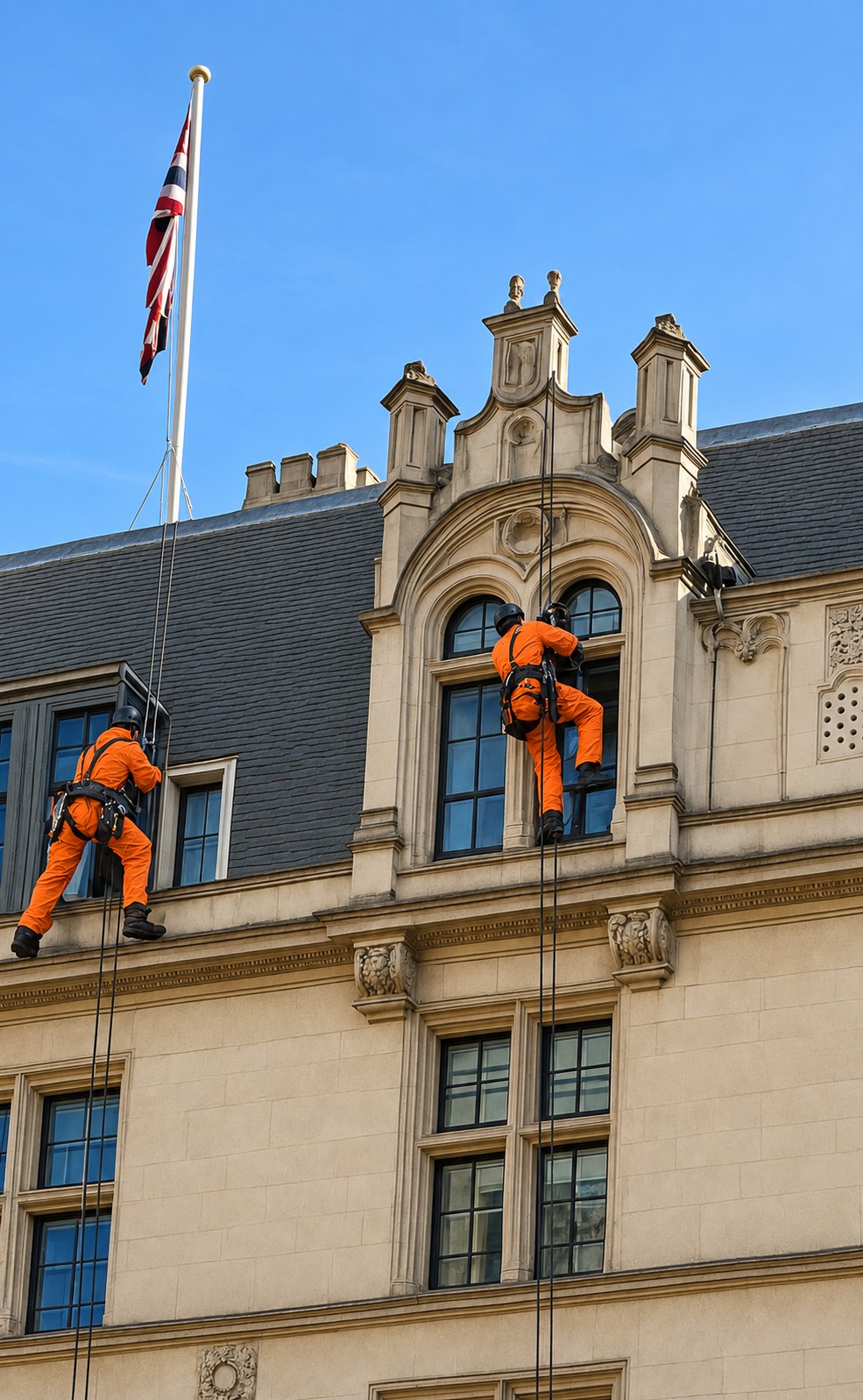
Decorative stonework inspection and making safe
The high-level ornamental details include small decorative stone sculptures and intricate sections of stonework where movement cannot be assessed properly from ground level. Rope access placed the technicians directly alongside the individual details so they could carry out close visual and physical checks.
The project method statement records a rope-access survey of the external ornamental stonework above 17 dormer windows, specifically checking for loose or insecure structures. Where movement or instability was found, CCS carried out remedial work by resetting affected stone sections so the decorative elements were left safe.
This combination of inspection and practical remedial work meant the access system was used not simply to observe defects, but to reach affected details closely enough to address them.
Additional project work
Wider external remedial and restoration works
CCS also returned for a separate programme of remedial work across the building externals. This included rubbing down and repainting handrails, remedial and restoration work to window frames and other ironwork, and work to rainwater goods down to pavement level.
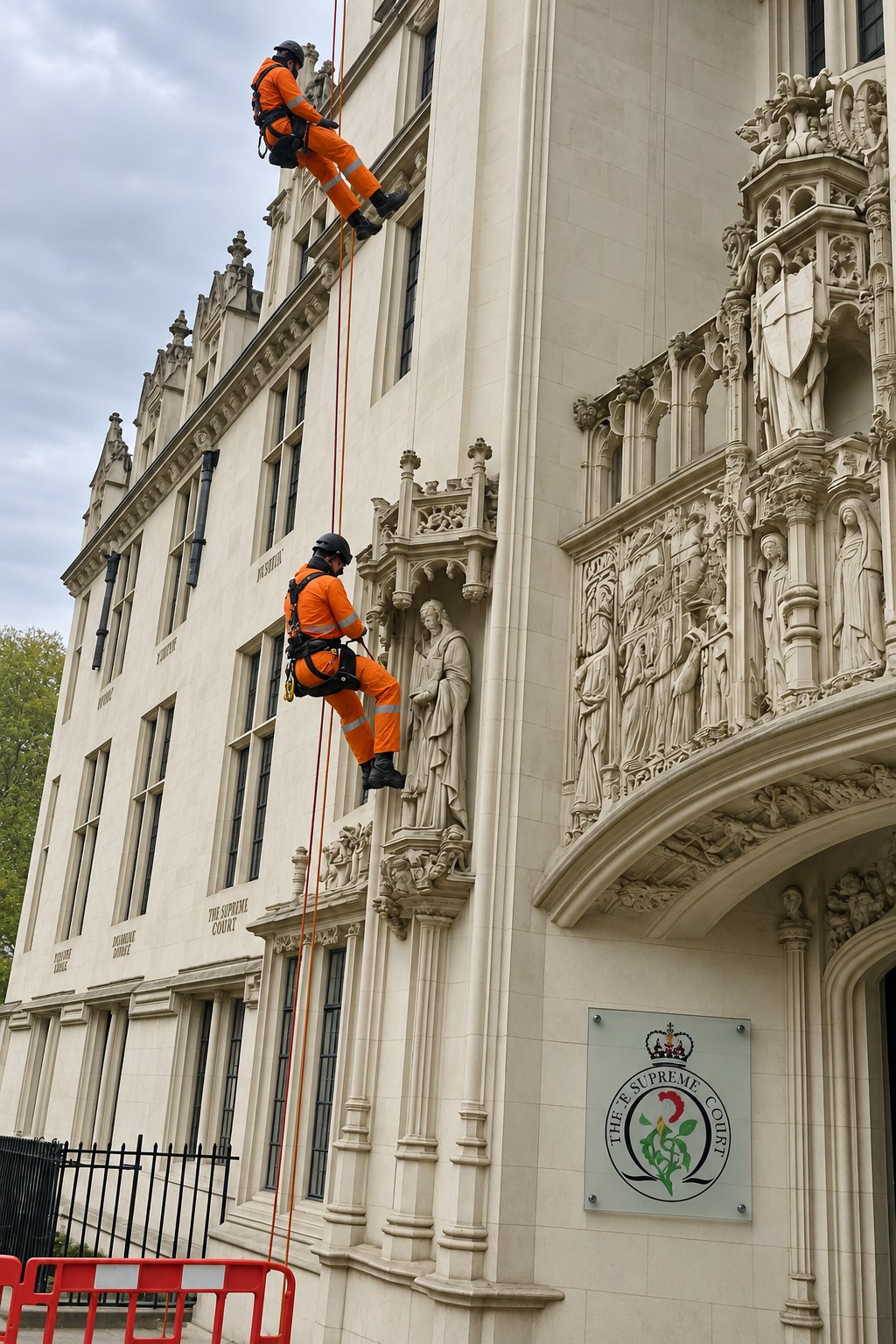
More than a one-off inspection
The two principal programmes show the range of work that can be completed from ropes on the same building. One required detailed hands-on checking and making-safe of individual stone features; the other extended to broader external maintenance and restoration across multiple building elements.
For buildings with repeated high-level details, rope access can allow inspection, preparation and remedial work to be planned as part of one controlled access strategy.
External elements covered
- Decorative and ornamental stonework
- Handrails and external ironwork
- Window-frame remedial and restoration work
- Rainwater goods and external drainage components
Why rope access suits ornamental stonework
Small projecting details need close inspection because movement, cracking and insecure sections may not be obvious from a distant visual check. Rope access allows the technician to work immediately alongside the detail while maintaining a comparatively small access footprint at ground level.
Where the defect and repair method are known, the same access approach can also allow suitable localised remedial work to be completed without changing to a separate access system.
Need a high-level stonework or façade inspection?
Send photographs, elevations or an existing survey together with the building address and the areas of concern. CCS can review whether close rope-access inspection is suitable and whether the likely scope can include remedial work during the same programme.
This case study describes work carried out by CCS Rope Access at the UK Supreme Court. It does not imply endorsement of CCS Rope Access by the UK Supreme Court.