


High-level sealant repairs
Failed joints need diagnosis, preparation and the right material
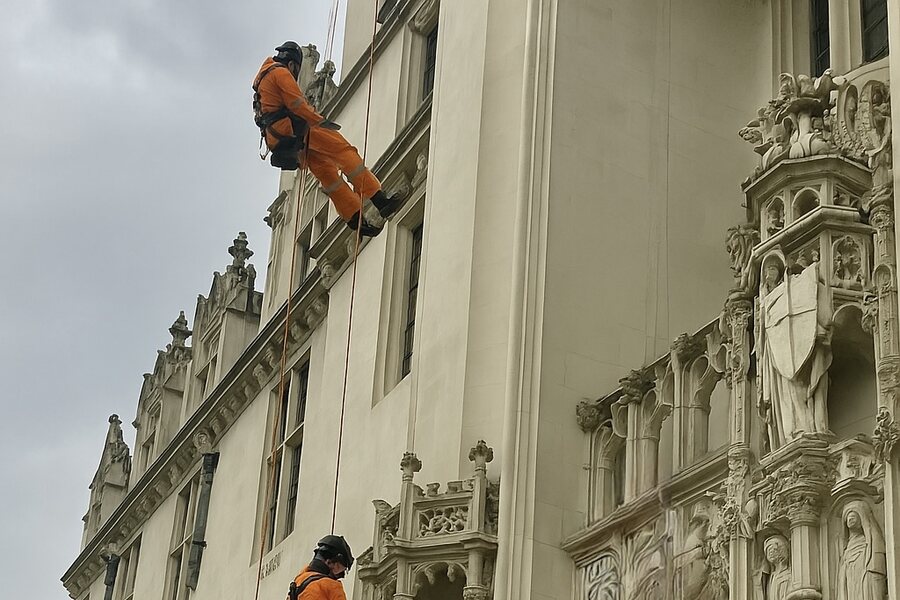
Cracked, detached or poorly applied sealant can allow water into façade and glazing interfaces. Rope access provides close access to inspect the joint and carry out localised remedial work without automatically scaffolding the elevation.
Sealant is not a universal cure for leaks. Water may be entering above or behind the visible defect, so the likely route and joint design should be understood before simply applying more material.
Sealant and mastic work at height
The repair scope is based on the joint condition, substrate and required performance.
- Removal of failed or detached sealant
- Cleaning and preparation of joint faces
- Application of compatible primers where specified
- Backer material and joint-depth correction where appropriate
- Window, glazing and panel perimeter sealing
- Localised water-ingress investigation and remedial trials
Common signs of joint failure
Close inspection is useful where the visible condition or leak pattern does not provide enough information from inside or ground level.
- Cracking, splitting or loss of adhesion
- Gaps at window, panel or frame interfaces
- Weathered joints and failed previous patch repairs
- Dampness or staining associated with high-level openings
Avoid cosmetic patching over a failed joint
We inspect the joint, remove unsuitable loose material and confirm the proposed product and preparation. Where the leak source is uncertain, a trial area or separate investigation may be more sensible than resealing a large elevation blindly.
Why use rope access for sealant repairs?
Sealant defects are often narrow, linear and distributed around windows or panels—exactly the type of work that can suit controlled vertical access on the right building.
- Direct access to glazing and façade perimeters
- Less obstruction than scaffold for targeted repairs
- Can be combined with photographs and condition checks
- Commercial planning around occupants and public areas
Questions clients ask
Frequently asked questions
Can you stop a leak by resealing the outside?
Possibly, but only if the failed joint is the actual entry path. Water can travel behind cladding, frames and façade components, so investigation may be needed before repair.
Can new sealant be applied over old sealant?
That is usually poor practice where the existing material has failed. The joint normally needs suitable removal, cleaning and preparation so the replacement can bond correctly.
How do you choose the sealant?
Selection depends on the substrates, joint movement, exposure, existing materials, manufacturer requirements and any project specification. One product is not suitable for every façade.
Can you carry out a small trial repair first?
Yes. A controlled trial can be sensible where the leak route or material compatibility is uncertain, provided the client understands how success will be assessed.